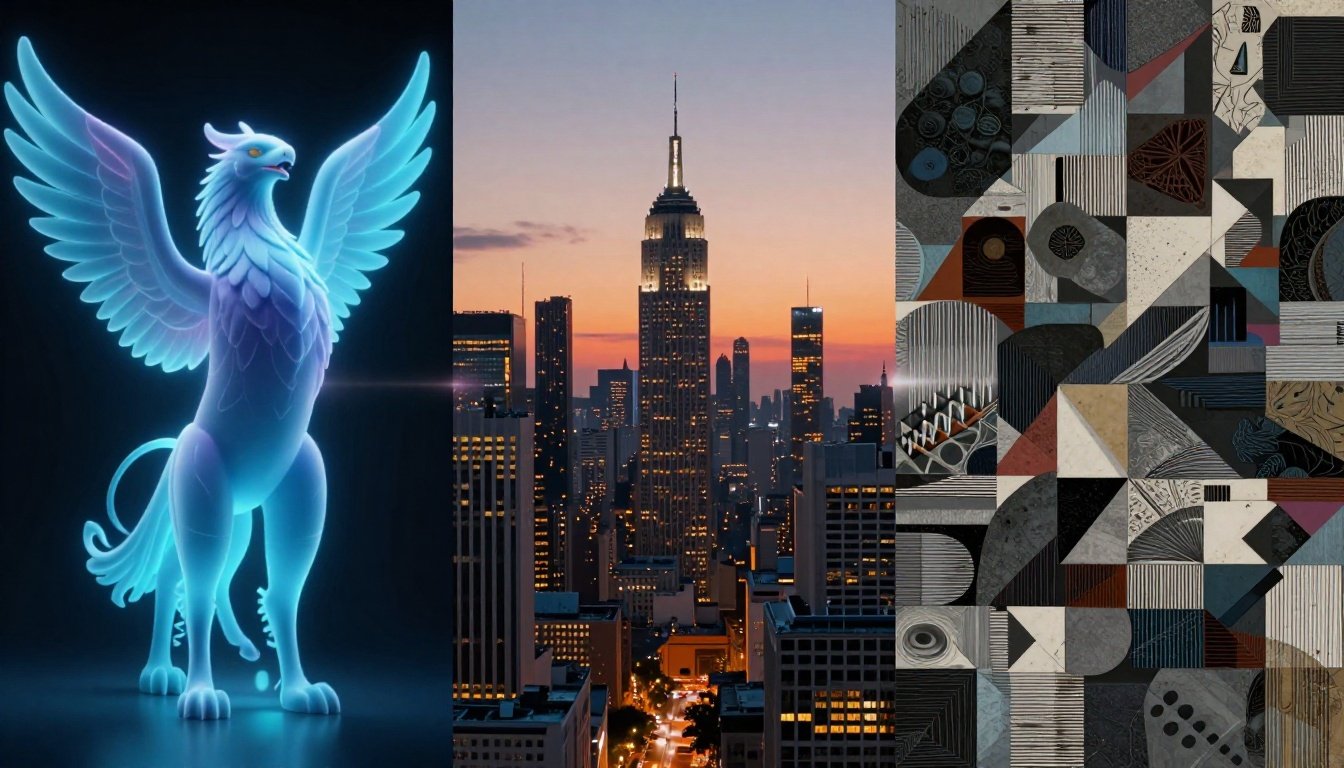
Imagine turning a simple sentence into a stunning visual masterpiece. That's the magic of text-to-image AI right now. Tools like these have exploded in popularity, letting anyone from hobbyists to pros create art without a brush. In 2026, Midjourney, DALL·E 3, and Stable Diffusion lead the pack. This guide compares them head-to-head on features, ease, and output to help you pick the right one for your projects.
Section 1: Understanding the Core Technology and Accessibility
All three tools rely on diffusion models. These start with noise and refine it step by step into clear images based on your text prompt. Midjourney uses a closed system with secret training data, which keeps details under wraps. DALL·E 3, from OpenAI, builds on vast web-scraped images but filters for safety. Stable Diffusion shines as open-source, so developers tweak it freely with public datasets.
This setup affects how each tool handles prompts. Closed models like Midjourney and DALL·E 3 often produce polished results out of the box. Open ones like Stable Diffusion let you customize deeply, but you might need extra setup.
Access Points and Platform Dependencies
Midjourney runs through Discord, where you type commands in a chat. It's quick for social users but feels clunky if you hate bots. DALL·E 3 integrates into ChatGPT Plus or Bing's free creator, making it simple—just chat and generate. Stable Diffusion needs a download for local use or sites like Automatic1111's web UI; beginners might prefer hosted options like Leonardo.ai.
Ease matters a lot. If you're new, DALL·E 3 wins with its chat-like flow. Pros love Stable Diffusion's flexibility on your own PC, skipping queues.
Licensing and Commercial Use Clarity
Midjourney offers paid plans with full commercial rights for subscribers. Free trials limit use, but pros can sell outputs without worry. DALL·E 3, via ChatGPT Plus at $20 monthly, allows commercial tweaks but bans some sensitive content. Stable Diffusion is free and open, so you own everything—though web hosts add their rules.
Recent court cases on AI copyrights stress checking terms. Midjourney updated policies in early 2026 to clarify artist opt-outs. Always review the latest TOS for safe business use.
Section 2: Quality, Style, and Aesthetic Output Analysis
Photorealism vs. Artistic Interpretation: Visual Fidelity Benchmarks
Midjourney excels in dreamy, artistic styles with rich colors and details. It turns prompts like "a cyberpunk city at dusk" into vibrant scenes that pop. DALL·E 3 nails photorealism, creating lifelike portraits or landscapes that fool the eye. Stable Diffusion matches both but shines when you fine-tune for specific looks, like hyper-real ads.
Each has strengths. Midjourney's outputs often feel like gallery art. DALL·E 3 keeps things coherent, even in busy scenes. Stable Diffusion varies by your setup—great for tailored fidelity.
Prompt Adherence and Contextual Understanding
DALL·E 3 best follows complex prompts, weaving in details like "a red fox in a snowy forest wearing a scarf." It understands context without much tweaking. Midjourney needs prompt engineering, like adding weights to focus elements, but rewards effort with unique twists. Stable Diffusion can stray if not guided, yet plugins help it stick close.
Try this prompt: "A chef cooking pasta in an Italian kitchen with steam rising." DALL·E 3 captures the steam and tools accurately. Midjourney adds flair but might warp the chef's pose. Stable Diffusion works well with added descriptors.
Good prompt skills cut frustration. Start simple, then layer in styles for better results across tools.
Handling Specific Elements: Text, Hands, and Complex Scenes
Text in images trips up many AIs, but DALL·E 3 renders readable signs or logos cleanly. Midjourney struggles here, often garbling letters into abstracts. Stable Diffusion improves with fine-tuned models, like those for typography.
Hands and faces pose challenges too. DALL·E 3 draws natural fingers and expressions in crowds. Midjourney favors stylized limbs that fit its vibe. Stable Diffusion falters on anatomy without ControlNet but fixes it fast.
For busy scenes, like a market festival, DALL·E 3 keeps elements logical. The others might blend objects oddly. Test with your needs to see what holds up.
Section 3: Speed, Cost, and Workflow Integration
Pricing Structures: Subscription Models vs. Usage Tokens
Midjourney starts at $10 monthly for basic access, scaling to $60 for unlimited generations. No free tier beyond trials. DALL·E 3 bundles into ChatGPT Plus at $20 a month, with 50 free images daily on Bing. Stable Diffusion costs nothing locally if you have a decent GPU; web versions charge per image, like $0.01 each.
Costs add up for heavy use. Subscriptions suit teams, while free Stable setups save cash long-term. Weigh your volume before committing.
Generation Speed and Queue Times
Midjourney generates in 30-60 seconds on paid tiers, but free users wait in lines during peaks. DALL·E 3 spits out images in under 20 seconds via ChatGPT, rarely queuing. Stable Diffusion flies locally—seconds per image—but web UIs match Midjourney's wait times.
Speed impacts flow. Quick tools like DALL·E 3 let you iterate fast for ideas. Slower ones fit batch work, not rushed deadlines.
Integration with Professional Tools (APIs and Plugins)
DALL·E 3 offers a strong API for devs, plugging into apps like Photoshop via plugins. Midjourney lacks a public API but works with Discord bots in workflows. Stable Diffusion thrives here—open APIs and extensions link to Blender or Figma easily.
For AI image tools tested in 2025, Stable's openness stands out. Designers grab pre-built models for seamless edits. Casual users stick to basic interfaces.
Section 4: Customization and Advanced Control Features
Fine-Tuning and Training Capabilities (Focus on Stable Diffusion)
Stable Diffusion lets you train custom models with LoRAs or Dreambooth, using your photos for unique styles. Upload 10-20 images, and it learns your face or brand. Midjourney offers style tweaks via parameters but no personal training. DALL·E 3 stays basic—no fine-tuning, just prompt edits.
This freedom suits artists. Stable users create endless variations without starting over. Closed tools limit you to their palette.
Control Mechanisms: Image-to-Image and ControlNet
Image-to-image turns sketches into full art across all three. Midjourney blends uploads with prompts for style shifts. DALL·E 3 edits existing pics subtly, like changing outfits. Stable Diffusion's ControlNet adds pose or edge guidance, perfect for exact layouts.
Graphic designers love this precision. ControlNet ensures hands match your sketch. Casual folks get by with simple uploads.
Parameter Control: Aspect Ratios, Stylization, and Chaos Settings
Midjourney packs options like --ar for ratios, --s for stylization, and --c for chaos to vary outputs. DALL·E 3 keeps it easy with basic aspect picks in ChatGPT. Stable Diffusion mirrors Midjourney's params in its UI, plus seeds for repeats.
These dials help refine. Want wild ideas? Crank chaos on Midjourney. Need consistency? Lock ratios on Stable.
Section 5: Community, Iteration Cycle, and Future Outlook
Community Support and Shared Resources
Midjourney's Discord buzzes with 20 million users sharing prompts and tips. It's a hub for inspiration. Stable Diffusion's Civitai site hosts thousands of free models and LoRAs. DALL·E 3 relies on OpenAI forums, less vibrant but helpful for beginners.
Communities speed learning. Grab a prompt from Discord, and your results soar. Shared resources cut trial-and-error.
Iteration Speed and Feature Rollout
Midjourney jumped to V6 in late 2025, boosting detail and speed. DALL·E 3 refined from 2 to 3 in 2024, with 2026 tweaks for better text. Stable Diffusion updates weekly via open-source forks, like SDXL for higher res.
Fast cycles keep tools fresh. Leaders push boundaries, so check releases often.
Ethical Considerations and Content Filtering
Midjourney blocks violent or nude prompts strictly, with appeals rare. DALL·E 3's filters catch biases and hate, prioritizing safe outputs. Stable Diffusion runs unfiltered locally, but hosts add guards—users must self-regulate.
Filters protect but limit. Sensitive projects need DALL·E's caution. Open tools demand your ethics.
Conclusion: Choosing Your Champion AI Image Generator
Midjourney fits artists chasing bold, stylized visuals—think concept art or posters. DALL·E 3 suits beginners or quick tasks, excelling at clear prompts and text elements like logos. Stable Diffusion empowers tinkerers wanting full control, ideal for custom workflows or free use.
Each shines in its lane. If you need a fast logo sketch, start with DALL·E 3—it's plug-and-play. Dive deeper with the others as you grow. Pick one today and spark your next creation.
Related Articles
ChatGPT vs. Jasper vs. Copy.ai Showdown
We put three of the top AI writing assistants head to head. Find out which one wins.
AI Website Builders Compared for Speed, Design, and SEO Power
We compare top AI website builders on design quality, SEO features, speed, and value.

Best AI Tools in 2026: The Ultimate Guide
Discover the most powerful AI tools transforming productivity in 2026.